
 |
| Picture made by my good friend NeffoArt |
Intro
There
are a lot of things that you can think of when you hear the words
"video games", it could be everything from "Lok-thar
ogar" to "profit". The last one especially since the
video game industry is booming all over the world and making profit
like never before, gaining capital to expand and even evolve the
technology and industry. Who knows what the industry will look like
in the future!
 |
| Sic Parvis Magna...don't you agree? |
Video games are in other words
a financial successful entertainment, bringing joy to both young and
old. It has also been acknowledged as a platform for art, as several
games have been experimental or carried with them themes taken
directly from philosophical schools. More and more artists are using
digital games in ways you would've never thought of back in the days
when Atari 2600 where hitting the stores.
What
I'm going to present with this essay, is another perspective on video
games...or rather: the act of PLAYING video games and what it
means.
I'm not going to talk about experiences or how video gaming affect
everyday life directly, since I already covered it on another essay
of mine about how art affect our lives. Instead, I'm going to present
to you a perspective with the help of one of the biggest philosophers
of the 17th
century: René Descartes.
René Descartes – Dualism
René Descartes – Dualism

You
may have heard about the classic phrase "Cogito Ergo Sum",
or in english: I think, therefore I am.
This is the man that said those thought provoking words. There is
much to say about Descartes, like his contribution to rationalism and
science, and the way he offered a philosophy that would influence
even future philosophers like Jean Paul Sartre.
What we are going to focus on is his famous dualism. Descartes argued that humans are composed of two substances: the mind/spirit and the physical/body. Although these two substances can exist independent without each other (Rozemond, 1998). They also complete each other: Even if the mind can exist on its own, it needs a body to act and extend into the physical world, while the physical body can exist without a mind of its own, however it would only act in an automatic way, like the animals do (Descartes meant that animals were more or less just machines without emotion). This presented a statement of a life after death since when you die, it's only the physical body that dies while the spirit lives on forever. However, it is also important to mention the struggle between the body and the mind. Even if both are needed to make a human, the fact that they are independent makes the symbiosis troublesome, especially for the physical body. Descartes argued that it is in fact from the physical body that, even if giving the mind an extension to the physical world, even limited it's control by having emotions and physical needs like nutriment and sexual desires (Rozemond, 1998). So ironically, even if the body is the reason the mind can execute its plans and ideas..it is also the very same thing that limits its own actions.
What we are going to focus on is his famous dualism. Descartes argued that humans are composed of two substances: the mind/spirit and the physical/body. Although these two substances can exist independent without each other (Rozemond, 1998). They also complete each other: Even if the mind can exist on its own, it needs a body to act and extend into the physical world, while the physical body can exist without a mind of its own, however it would only act in an automatic way, like the animals do (Descartes meant that animals were more or less just machines without emotion). This presented a statement of a life after death since when you die, it's only the physical body that dies while the spirit lives on forever. However, it is also important to mention the struggle between the body and the mind. Even if both are needed to make a human, the fact that they are independent makes the symbiosis troublesome, especially for the physical body. Descartes argued that it is in fact from the physical body that, even if giving the mind an extension to the physical world, even limited it's control by having emotions and physical needs like nutriment and sexual desires (Rozemond, 1998). So ironically, even if the body is the reason the mind can execute its plans and ideas..it is also the very same thing that limits its own actions.
Another important thing to mention before I go on and
analyze the act of gaming, there is another component that is a part
of this dualism: Sensation. According to Descartes, sensation
serves as a proof that there is a union between mind and body; since
sensation is produced by the body, but the mind helps make
something more of it (Rozemond, 1998). Without the mind, the body couldn't make
anything of the sensation since it's not made to handle
sensations; and without body there wouldn't be any sensation
for the mind to process. The sensation itself plays such a big
role in Descartes philosophy, that there have even been discussions
that there is a Trialism instead of a Dualism, meaning the sensation
itself could actually be a substance when in fact it is "just"
a modus1
shared between mind and body.
Now
that I have given you a brief presentation of the dualism of
Descartes, it is time to present to you how video gaming is in fact a
technological form of the dualism.
Two substances co-existing – The act of playing
Two substances co-existing – The act of playing
If
I were to ask someone what is needed for gaming, one would usually
ONLY talk about the technicalities: a computer, headset, controller,
console, tv etc. I find it quite unnecessary to do so, it's like if
Descartes had to include every body part of a human being when he
spoke of the physical body. Sure, they are all a part of the body,
but not needed to include when we talk about an extending
substance...we only need to say "this substance is extending"
to understand what parts are included and the same goes for the video
game console
itself: which serves as our extending substance for this essay.
We
now have a video game console/our extending substance, but what about
the thinking substance? What about the mind? Well, there is another
important thing we need to make video gaming possible: we actually
need someone to play the game, a player
who
will serve as the thinking subject.
Like the mind/soul of Descartes dualism, the player is the force that
commands the body/video game according the their will. They aren't in
full control entirely, since the video game/body has its limits
depending how the game/body is constructed. For example; we can't
raise an army in an action game, but we certainly can in a strategy
game. Different games/bodies offer different possibilities for what
the mind/player can do.
So if we would illustrate this dualism, it would look like this:
So if we would illustrate this dualism, it would look like this:

Now that we have identified the two substances of video gaming, we can finally talk about what becomes of this dualism. For you see: both of these "substances" can exist independently, but they make much more of their existence by interacting with each other. Just like the case of Descartés dualism; the two substances together create something one of them couldn't create alone: Sensation.
One could make the argument that the sensations video
games present to us exist alone in the body/video game, stating that
the mind plays no role here. Others would say that it's the other way
around: sensations are simple something created from the mind itself,
therefor the body/video game is not needed. I disagree completely,
with both arguments. A "sensation" like
joy/sorrow/anger/fear doesn't exist on its own, it need a chemistry
of two substances to come to life. How could someone tell?
To begin with, showing someone, for example, a video
clip of a dog playing with its owner can not only give someone what
we call "joy", it can give fear/disgust/sorrow for
different people...all depending on what memories (which affect the
substance "mind") a clip of a dog would give us. Some may
think of happy moments, some think of their dog that passed away,
while others think of when they were attacked by a dog when they were
a child. While the clip only provides the means of sensation, it is
up to the mind to make something of the sensation. If
sensation existed in the clip itself, then everyone would feel the
same sensation...the individuality of what sensations may come proves
that sensation doesn't exist on its own.
And
this applies EVEN more to video games. Not only do they offer
"satisfaction" in various ways trough genres fitting for
different people, a lot of today's games even offer stories that can
potentially bring out "sorrow" or "guilt"or
"apathy". Of course, it all depends on the mind/player that
interacts with the body/video game: it has to be the right mind and
the right body for the best sensations to come out.
 |
| All you need to do is look up gamer reactions on youtube, and you'll see several examples of sensations games offer us! |
Differences
and purpose
Now we have presented how playing video games could be interpreted as the modern day equivalent of the dualism of Descartes, since we can see the similarities between the thinking substance - the player, and the similarities between the extending substance – the video game console. But it is also important to talk about the obvious differences, since this essay's purpose is not to revive the philosophies of Descartes...since after 400 years they ARE outdated and irrelevant in today's philosophical discussions. First of, the dualism Descartes presented was a description how the human body and mind worked, and by today's standards rely too much on spirituality as scientists/doctors don't believe in souls in a medical manner. For one thing Descartes didn't believe that animals had souls, and therefore couldn't feel pain or sadness...they are simply machines. Don't think I have to say more to make this point stronger.
Now we have presented how playing video games could be interpreted as the modern day equivalent of the dualism of Descartes, since we can see the similarities between the thinking substance - the player, and the similarities between the extending substance – the video game console. But it is also important to talk about the obvious differences, since this essay's purpose is not to revive the philosophies of Descartes...since after 400 years they ARE outdated and irrelevant in today's philosophical discussions. First of, the dualism Descartes presented was a description how the human body and mind worked, and by today's standards rely too much on spirituality as scientists/doctors don't believe in souls in a medical manner. For one thing Descartes didn't believe that animals had souls, and therefore couldn't feel pain or sadness...they are simply machines. Don't think I have to say more to make this point stronger.
 |
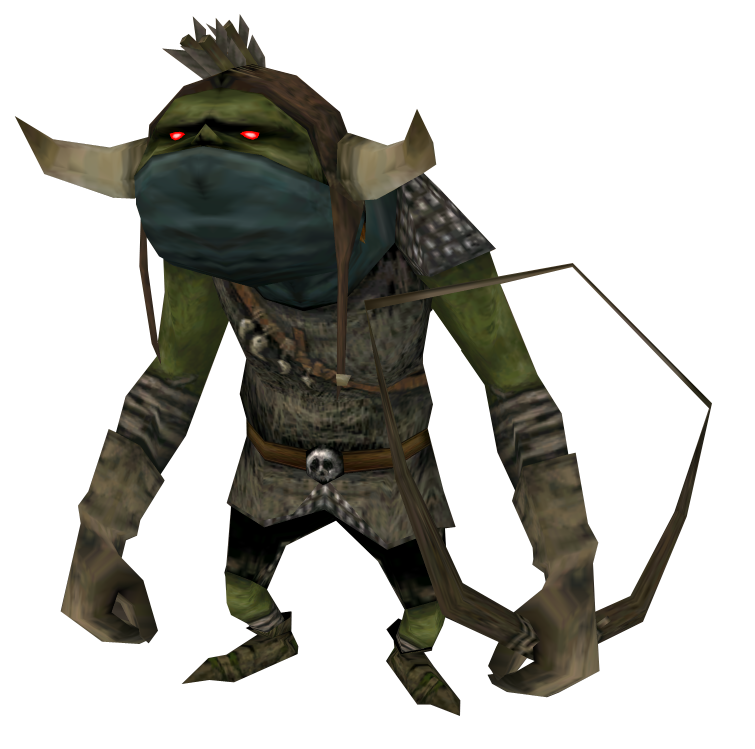
| "What's the difference this and a regular dog?" |
Secondly, the player is the one having emotions
and acts upon them when they are playing the game, while according to
Descartes there is a battle going on between the mind and body (wants
vs needs). The console is not trying to take control over you or acts
sometimes according to its own needs, since it is just a simple
machine and not a functional biological body (until cyborg-consoles
pop up soon).
With that said, I will still say that the practical parts of the dualism of Descartes still feel similar to the act of playing video games, especially when it comes to the player's mind's dependence on the console body to feel sensations they wouldn't feel otherwise in their everyday life. Empowerment, curiosity, excitement and so many more sensations that have been and are being given to us that play video games, and in other words take part in the modern synthetic dualism of Descartes that we have created for ourselves.
Potential
further discussion – Cyberpunk and transhumanism
Whether
you believe in the dualism of Rene Descartes or not, you can't deny
that we humans live life to experience sensations in various ways. We
are, after all, emotional creatures that want to do more than just
survive physically, but also find enjoyment psychologically. The
excitement of exploration, the pride of achieving something bigger
than everyday life, the relief of getting rid of something
troublesome....all those things are what makes us go trough the days.
And as I mentioned before; video games offer sensations that other
hobbies/activities can't always give us, even if they are synthetic
and can only give us a limited amount of the required sensation. One
can't help to ask if technology can take a step further: can it offer
us sensations that feel so real that we would even give up the
sensations the regular world would give us?
The topic has been brought up before in cyberpunk and transhumanism, which has been featured in popular fiction like anime, movies and literature. A great example would be Neuromancer, a novel written by William Gibson (1984) which would not only be the start of the cyberpunk genre, but would also invent the concept of cyberspace and virtual reality. In the world of Neuromancer exists "The Matrix", which is a virtual reality space which has the function of what internet has to us these days. The main protagonist, Henry Dorsett Case, was once a brilliant computer hacker which used to be hooked up to the Matrix but was caught and had his central nervous system disturbed by mycotoxin, which makes him unable to log on to the virtual reality. Altough Case is spared and allowed to live, he feels dead on the inside and just views his body as "mere meat" that only exists to sustain his consciousness long enough until he can log on into cyberspace once again. He tries to cope with reality by using drugs, but nothing will come close to what he experienced in the virtual reality. He is first truly alive when technology can extend him further, and when he's finally able to log on to the matrix again...he can't help to cry tears of joy.
The topic has been brought up before in cyberpunk and transhumanism, which has been featured in popular fiction like anime, movies and literature. A great example would be Neuromancer, a novel written by William Gibson (1984) which would not only be the start of the cyberpunk genre, but would also invent the concept of cyberspace and virtual reality. In the world of Neuromancer exists "The Matrix", which is a virtual reality space which has the function of what internet has to us these days. The main protagonist, Henry Dorsett Case, was once a brilliant computer hacker which used to be hooked up to the Matrix but was caught and had his central nervous system disturbed by mycotoxin, which makes him unable to log on to the virtual reality. Altough Case is spared and allowed to live, he feels dead on the inside and just views his body as "mere meat" that only exists to sustain his consciousness long enough until he can log on into cyberspace once again. He tries to cope with reality by using drugs, but nothing will come close to what he experienced in the virtual reality. He is first truly alive when technology can extend him further, and when he's finally able to log on to the matrix again...he can't help to cry tears of joy.
 |
| All of this for the sensations you desire |
Without going in for a fully detailed analyze of the book, we can clearly see that Case's longing to experience the matrix comes from his disappointment in the real world: after witnessing the amazing cyberspace, the sensations his regular senses can give him won't simply do anymore. He has become addicted to the extension that technology offers him.
Even if video games have in no way as much effect on us as The Matrix has on Case, I can't help to compare what we have to what Case is trying to get. Even if René Descartes dualism is outdated and in no way describes how the human body works, you might argue that today's technology and the intellectual discussions of cyberpunk/transhumanism, might be a form of a modern interpretation of the dualism: in which we humans are the thinking substance, and the technology we have created will become our extending substance. After all, who knows what sensations awaits us the day after tomorrow?
(1In
the philosophy of Descartes, modus would be the equivalent of
"attribute" or "quality")
Reference list
Gibson, William. (1984). Neuromancer. London: Voyager.
Rozemond, Marleen. (1998). Descarte's Dualism. Cambridge: Harvard University Press
Reference list
Gibson, William. (1984). Neuromancer. London: Voyager.
Rozemond, Marleen. (1998). Descarte's Dualism. Cambridge: Harvard University Press




Follow Me
Were this world an endless plain, and by sailing eastward we could for ever reach new distances